
The problem nobody budgets for
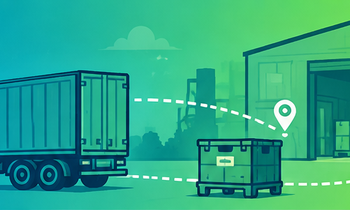
A missing stillage rarely arrives with a clear invoice. The costs spread across a busy operation: someone searches the yard, dispatch waits, purchasing orders an extra unit, and a customer or supplier is asked to investigate. Over time, avoidable delays can become accepted as part of the process. Returnable transport equipment deserves the same visibility as the goods it carries.
Where costs begin to multiply
Replacement purchases are only one part of the problem. Handling staff spend time checking locations and contacting other depots. Equipment shortages interrupt production or vehicle loading. Without a reliable movement history, teams also struggle to establish whether an asset was returned, transferred or simply parked in the wrong area.
Why manual records leave gaps
Spreadsheets and barcode systems can be useful, but only if every movement is recorded. In a high-volume facility, a container can pass through goods-in, production and dispatch without a manual scan. A record that is accurate on Monday may be misleading by Wednesday.
How RFID asset tracking works
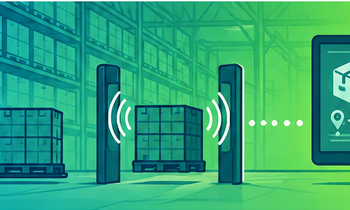
Suitable RFID tags are attached to reusable containers, roll cages, stillages or handling units. Readers at selected points identify tagged assets as they pass. The resulting time-stamped records can be used to establish the last detected movement and highlight exceptions. Active RFID tags may be appropriate where a selected system requires powered, touch-free identification; the best tag type depends on the item and operating environment.
Where JOANUS adds value
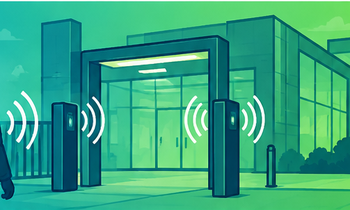
JOANUS provides touch-free identification of tagged assets at equipped locations. For example, an operator could record a stillage entering dispatch and later returning through goods-in, reducing dependence on manual updates at those checkpoints. This is monitored-area visibility, not uninterrupted GPS tracking between sites.
Start with one high-cost asset flow
Choose a reusable asset type that regularly goes missing and a small set of critical transfer points. Measure searching time, record completeness and exception investigations before and after an RFID pilot. The aim is to demonstrate useful operational outcomes rather than simply install more technology.
Start with a map of the returnable journey
An effective improvement programme begins with mapping how a returnable asset circulates. For a food producer, a plastic tote may leave a packing line, enter cold storage, travel to dispatch and eventually return from a distribution partner. In automotive operations, a stillage might pass through several plants and cross-dock locations before it comes back to its owner. The most important question is not simply how many units are on the asset register, but at which handovers responsibility changes and where movements are least reliably recorded. A useful map identifies each handover, the team responsible and the evidence currently available. This often reveals a small number of high-value checkpoints where automation can make a meaningful difference.
Choose the right assets for a pilot
Not every pallet or container warrants the same level of tracking. Start with equipment that is costly to replace, routinely delayed in returning, essential to production or shared among several parties. Assign each selected asset a unique identifier and establish a reliable baseline count. If equipment is stacked, metallic, exposed to wash-down or frequently moved outdoors, assess the tag specification and reader layout in the actual environment. A successful pilot must demonstrate repeatable identification under normal operating conditions, not just in an empty test bay. Staff should also know what to do when a damaged tag, missed detection or incorrectly assigned identifier creates an exception.
Turn identification events into practical decisions
A reader detecting a tag is the beginning of a workflow, not the end. The business needs rules that interpret each observation. Was a container expected to leave that door? Does it belong to this customer? Has it stayed away longer than the normal return cycle? Could multiple reads be duplicates of the same movement? Answers should feed into a simple, auditable process for investigation. A warehouse manager may need a daily list of overdue returns, whereas a procurement lead may need a monthly summary of loss, utilisation and replacement spending. Clearly defining those reports in advance prevents teams from collecting data they never use.
Measure the financial and operational impact
The business case should combine several measurable elements. Record monthly replacement purchases, rental or emergency substitution costs, time spent searching, delayed dispatches and the number of assets held as extra safety stock. During the pilot, compare a representative period before and after deployment while accounting for seasonal volume changes. It is also important to distinguish genuinely lost equipment from equipment merely stored in the wrong place. Identifying an asset at its last equipped checkpoint may narrow the investigation, but it does not guarantee its current location between readers. The objective is better evidence, fewer unnecessary purchases and a more disciplined return process.
Build accountability across company boundaries
Returnable equipment is particularly hard to manage when it crosses organisational boundaries. A haulier, customer and equipment owner may each maintain a different record, and none may capture every transfer. Agreeing a consistent asset identifier, handover procedure and exception owner can be as important as installing RFID readers. Where multiple businesses share information, define who can view events, how long records are retained and how discrepancies are resolved. A modest pilot at one dispatch gate and one returns gate can reveal whether the records are sufficient to support better conversations with partners before a larger rollout is considered.
Frequently asked questions
Can RFID track returnable containers between sites?
RFID can identify tagged containers when they pass through equipped locations. Visibility between those locations depends on the wider technology and integration in use.
Are active RFID tags necessary for every container?
No. Tag selection depends on range, asset material, operating conditions and system design.
Will RFID replace the warehouse management system?
Usually not. A suitable integration can supply identification events to existing processes and software.
How do we measure return on investment?
Compare missing-asset incidents, replacement expenditure, searching time and movement-record completeness during a controlled pilot.
Explore the solution
Find out how JOANUS could support your requirements. Speak to Identec about suitable tags, detection points and integration options. Visit https://www.identec.com/products/joanus/ or email info@identec.com.
Posted: Thursday, 29th October 2026