
You may not need to replace what already works
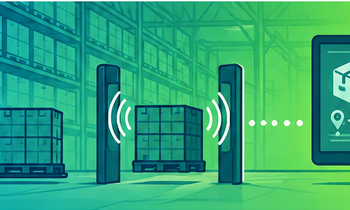
Most warehouses already rely on WMS, ERP and scanning workflows. The issue is often not a lack of software: it is an unrecorded physical transfer. A reusable container leaves dispatch, equipment crosses into production or an item returns from a customer, but the system is not updated in time.
1. Define a measurable problem
Start with missing handling assets, incomplete transfer records or repeated searching for equipment. Decide which outcome matters: fewer manual scans, better record completeness, faster investigations or improved return rates. Technology selection comes after the problem definition.
2. Map the points where movements matter
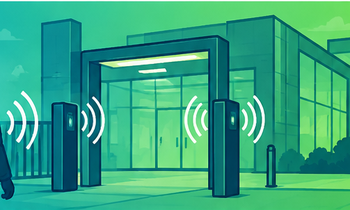
Identify receiving doors, dispatch gates, warehouse-to-production passages and equipment returns. RFID asset tracking can be useful at these defined checkpoints. An installation does not need readers everywhere, but it does need readers positioned where identification events will be meaningful.
3. Choose suitable hardware
Reader range, tag form factor, metal surfaces, mounting conditions, power and radio environment all affect design. Active RFID tags may suit particular long-range or touch-free workflows, but not every operation requires the same technology. Pilot the chosen equipment under real site conditions.
4. Connect events to operational decisions
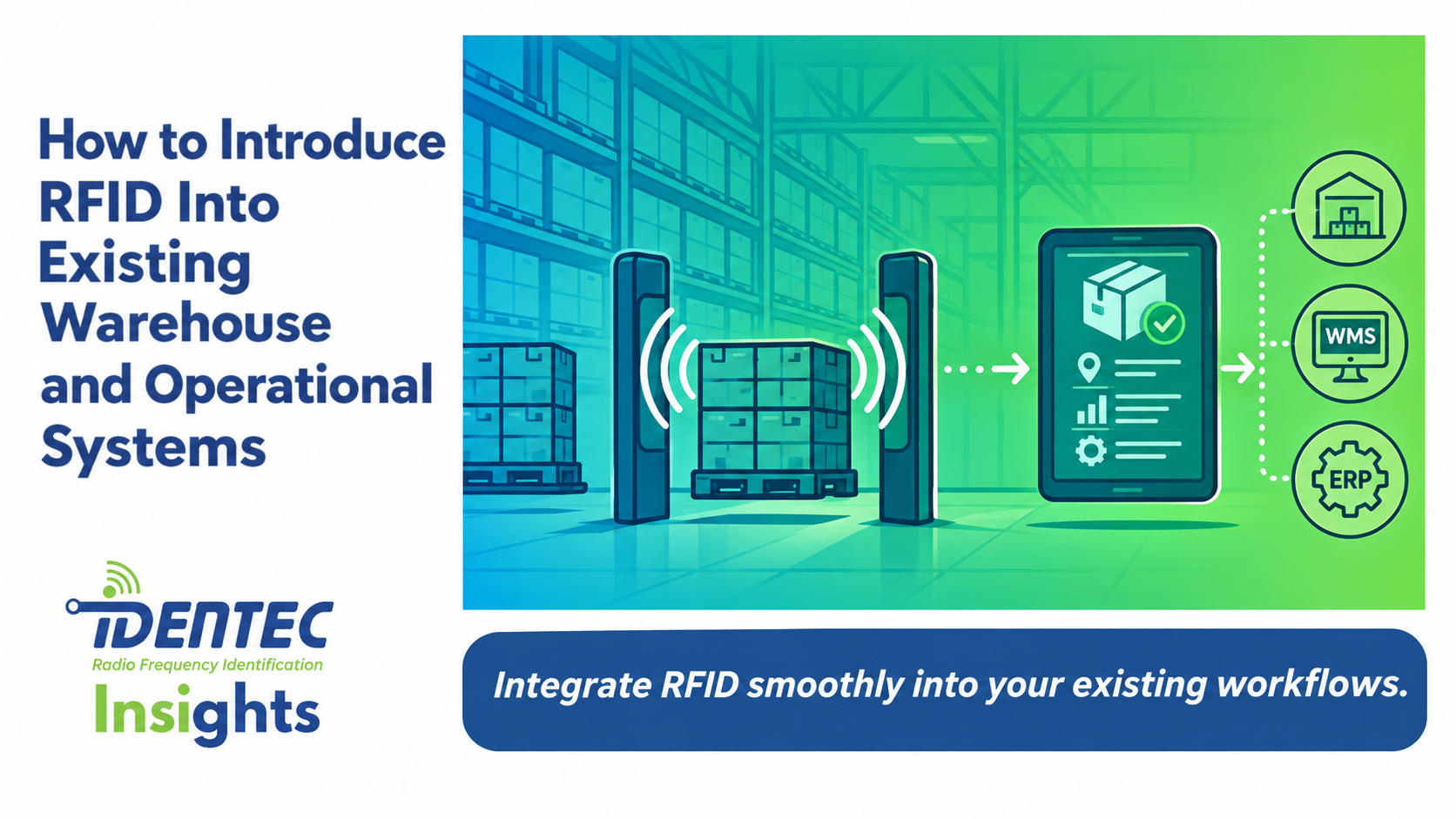
An RFID identification event might say that tagged container A crossed the dispatch checkpoint at a certain time. Software rules can then compare that event with an expected order, movement or asset assignment. Integration with an existing warehouse management system should be scoped around available reader interfaces, data formats and business logic.
5. Pilot, measure and expand
Trial a limited number of assets and checkpoints. Review read accuracy, false or duplicate events, work saved, exception handling and user adoption. JOANUS can contribute automated touch-free identification at equipped points, but it should be deployed as part of a defined workflow, not treated as continuous GPS tracking.
A sensible next step
Ask an RFID partner to review one asset flow and one integration requirement. A focused pilot produces stronger evidence for investment than a broad technology promise.
Define the event before selecting the equipment
Warehouse operators often begin with a broad request to track everything. A more useful starting point is to define the event they need recorded. For example, the moment a reusable container leaves a dispatch lane, when a specialist tool enters a controlled maintenance area or when a returnable unit arrives at a receiving gate. Each event should have an expected identifier, location, time and business meaning. Where an event could occur without passing a monitored location, be explicit about that gap. This simple exercise helps determine whether checkpoint-based RFID is appropriate or whether the application needs a different approach.
Design the software workflow around exceptions
Adding automated reads to a warehouse management system is not automatically useful. If a tag is detected several times while an item pauses in a doorway, a naive integration might create duplicate movements. If a tagged asset passes an unexpected exit, the system needs to identify the exception without generating unnecessary alarms. Plan event filtering, validation, duplicate handling and clear status definitions before deployment. Decide whether a reading updates inventory, opens an investigation or simply adds a record to the asset history. A good workflow should enable staff to correct mistakes and preserve an audit trail of changes.
Prepare for real-world warehouse conditions
Reader performance should be evaluated in the environment where it will operate. High metal racking, forklifts, dense pallets, fluid-filled goods and adjacent loading lanes can all complicate identification. Containers may arrive at different speeds, tag orientations or stacking patterns. A practical trial tests these conditions under normal traffic, including the busiest shifts. The team should also agree how to replace damaged tags and check whether identifiers remain consistently associated with the correct physical assets. Without this operational discipline, even reliable hardware can produce confusing data.
Choose pilot measures that matter to management
A successful pilot needs more than a demonstration showing that tags can be read. Establish baseline measures for missed transfers, manual scanning time, search time, overdue returnables or exceptions requiring investigation. Record the percentage of expected movements captured and investigate both missed and unintended detections. Include the effort required to maintain tags, readers and integration software when assessing cost. For a procurement director, a credible deployment decision depends on whether the benefits remain persuasive after installation, training, maintenance and system support are included.
Plan the handover to everyday operations
Pilot teams are often enthusiastic, but the wider organisation needs an operating model that survives staff changes. Assign responsibility for reader health checks, tag inventories, software permissions and exception resolution. Explain to warehouse staff where automated records are created and when manual intervention remains necessary. Agree the procedures for site outages and unusual movements, including equipment that bypasses normal routes. Integration documentation should identify the agreed data interfaces and escalation contacts. A phased rollout across selected lanes or buildings is usually easier to evaluate than a large deployment with no stable baseline.
Frequently asked questions
Can RFID be added without replacing our WMS?
Often yes, where appropriate event integration is available and compatible with the existing system.
Does every warehouse door need a reader?
No. Begin with the transfer points most relevant to your operational problem.
Will RFID eliminate manual scanning entirely?
Not necessarily. Some workflows will still need scanning, inspection or exception handling.
What should an RFID pilot measure?
Measure read reliability, manual effort, missing-asset investigations and the usefulness of data flowing into operational systems.
Explore the solution
Find out how JOANUS could support your requirements. Speak to Identec about suitable tags, detection points and integration options. Visit https://www.identec.com/products/joanus/ or email info@identec.com.
Posted: Monday, 16th November 2026