
A critical question during evacuation
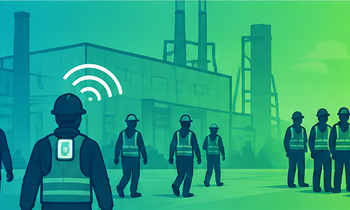
When an alarm sounds at a manufacturing plant or industrial campus, evacuation procedures must answer a difficult question: who is accounted for, and who still requires checking? Large sites may have multiple buildings, shifts, contractors and access points. Paper registers and manual counts remain important, but they can be slow to reconcile.
What an RFID mustering system can contribute
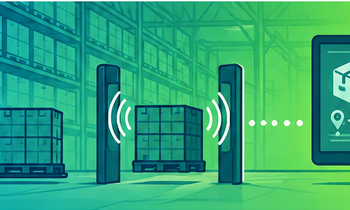
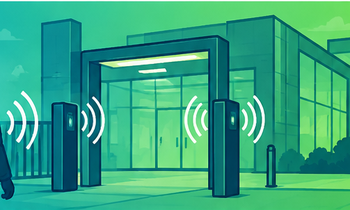
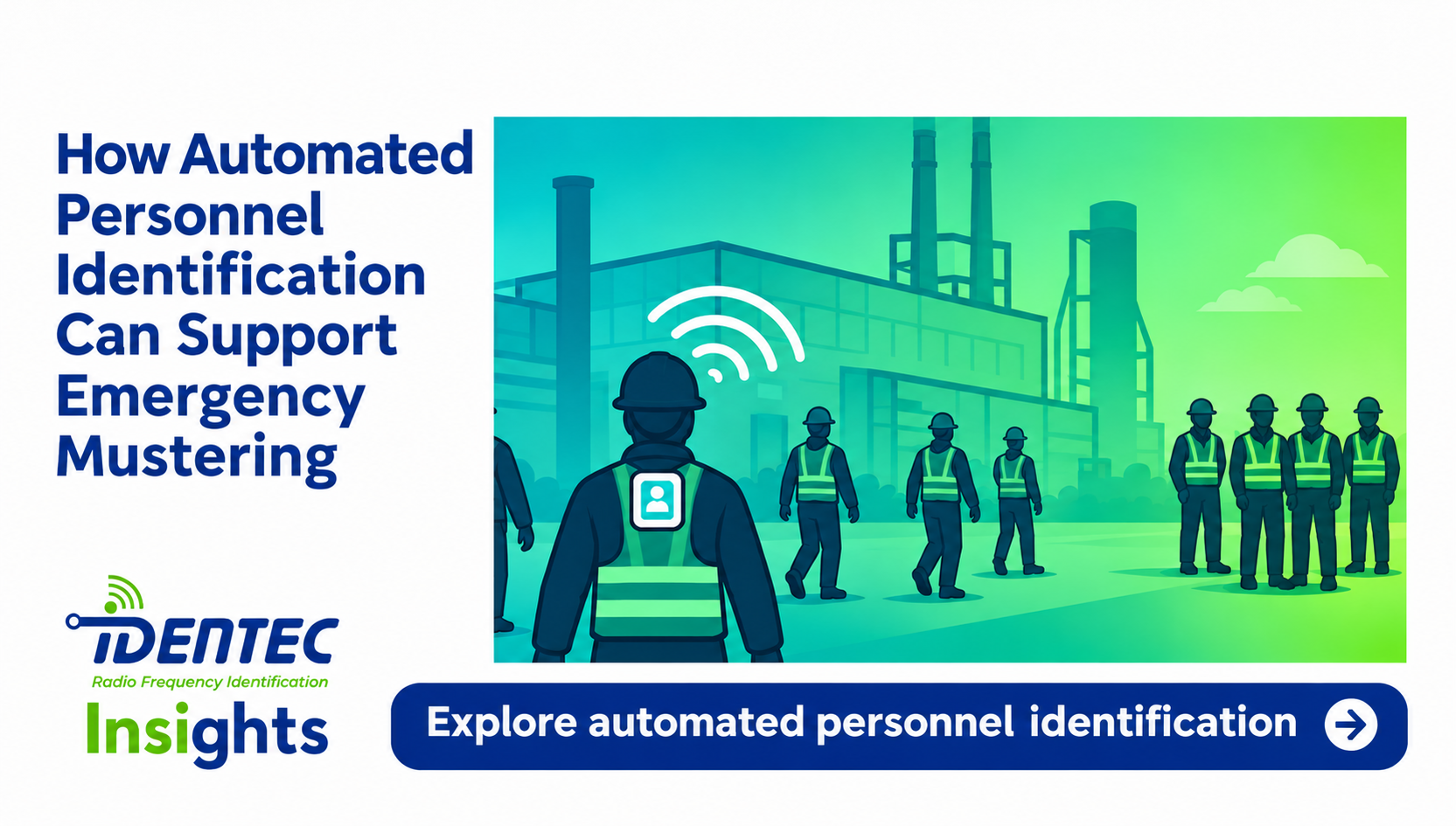
In an appropriately engineered RFID mustering system, personnel carry identification tags and readers are installed at designated entrances, exits or assembly points. When a tag is detected, the system can create an identification event for the response team to review. RFID personnel tracking in this context means identification at monitored points, rather than continuous location knowledge throughout the site.
Improving the roll-call process
A personnel safety tracking system can help compare a known attendance or access list with people detected at a muster point. Where suitable readers provide direction sensing, entrance and exit events can improve the quality of the record. Active RFID tags can support touch-free identification without asking every individual to stop and present a card.
Supporting mass evacuation without replacing safety procedures
A mass evacuation tracking system should complement alarms, marshals, established muster procedures and emergency services. A missing read does not prove that someone is inside a building, and a successful read is not proof that a person is unharmed. Tags can be forgotten, damaged or incorrectly assigned, so manual checks and clear escalation procedures remain essential.
Where CypherTag fits
Identec publishes a CypherTag people-tracking case study using RFID personnel tags, direction sensing and integration with an existing access control system. The example demonstrates how automated identification can support roll-call information in a designed installation. Site conditions, equipment selection and procedures must be assessed individually.
A sensible implementation plan
Begin by mapping muster points and movement routes, then review staff and visitor tag arrangements, reader coverage, privacy and data-retention requirements, and procedures for exceptions. Test under realistic evacuation exercises. The objective is better information for trained responders, not a technology-only safety guarantee.
Build the mustering process around real emergency procedures
An RFID mustering system should reflect the site's evacuation plan rather than dictate it. Start by documenting normal occupancy patterns, shift changes, contractor arrival processes, assembly-point arrangements and the responsibilities of fire marshals. Then identify the places where automatic identification would add useful evidence. A reader at a building exit may establish that a tag passed a designated point, while a reader at a muster area may help record arrivals. Neither event alone establishes that the individual is safe, and any system should preserve manual alternatives for workers without functioning tags. Emergency coordinators need to know exactly what each displayed status means.
Account for contractors, visitors and temporary workers
Permanent employees may receive a tag as part of a standard onboarding process, but the real difficulty is often the changing population of a site. Maintenance contractors, delivery drivers, agency workers and short-term visitors may enter only for part of a day. A practical deployment needs an explicit process to allocate identifiers, record check-in and check-out, recover temporary tags and handle people who arrive unexpectedly. Visitor records must also remain accurate when someone enters with a host or changes their planned working location. If these processes are weak, an apparently precise electronic roll call can still be incomplete.
Design for uncertainty rather than perfect readings
Industrial sites contain steelwork, vehicles, machinery and other features that can affect radio performance. Multiple people may pass a checkpoint together, or an individual may use a route that was not anticipated in the original design. Testing should therefore include crowded shift changes, emergency drills, alternative exits and the actual ways staff carry their tags. Clearly labelled categories such as confirmed at muster point, last detected at checkpoint and not yet accounted for can help prevent over-interpretation. The emergency team must be able to correct records through a controlled process and explain any uncertainty to responders.
Connect the technology with people and procedures
An automated roll call is most useful when it sits alongside alarms, incident command procedures and trained marshals. It should not replace a physical search strategy, evacuation instructions or the authority of emergency services. Decide who monitors the system, who escalates an unaccounted-for status and how communication works if power or connectivity fails. Regular drills provide an opportunity to compare electronic events with manual checks and to identify gaps in reader coverage. Organisations should document these outcomes and update their training, not simply treat a successful demonstration as proof of permanent readiness.
Evaluate outcomes without making unsafe assumptions
Useful measures include the time needed to build a provisional roll call, the share of expected tags identified at equipped points, the rate of false or duplicate events and the ease of investigating missing statuses. Compare these indicators across representative drills, including busy and quiet periods. Data privacy also matters: staff should know what identification information is collected, why it is needed, who can access it and how long it is retained. A well-designed system supports personnel accountability while maintaining proportionate controls over sensitive movement records.
Frequently asked questions
What is an RFID mustering system?
It is an identification setup that records tagged personnel at equipped checkpoints or assembly areas to help emergency teams reconcile roll calls.
Can it identify everyone during an evacuation?
Only where tags are correctly issued, carried and read within the installed coverage. Manual backup procedures are still required.
Is it the same as a mass evacuation tracking system?
The phrases often describe related applications. The actual capability depends on reader placement, software and the emergency response design.
Does it replace fire marshals?
No. It supports the information available to the people responsible for evacuation and accountability.
Explore the solution
Find out how CypherTag could support your requirements. Speak to Identec about suitable tags, detection points and integration options. Visit https://www.identec.com/products/cyphertag/ or email info@identec.com.
Posted: Thursday, 5th November 2026